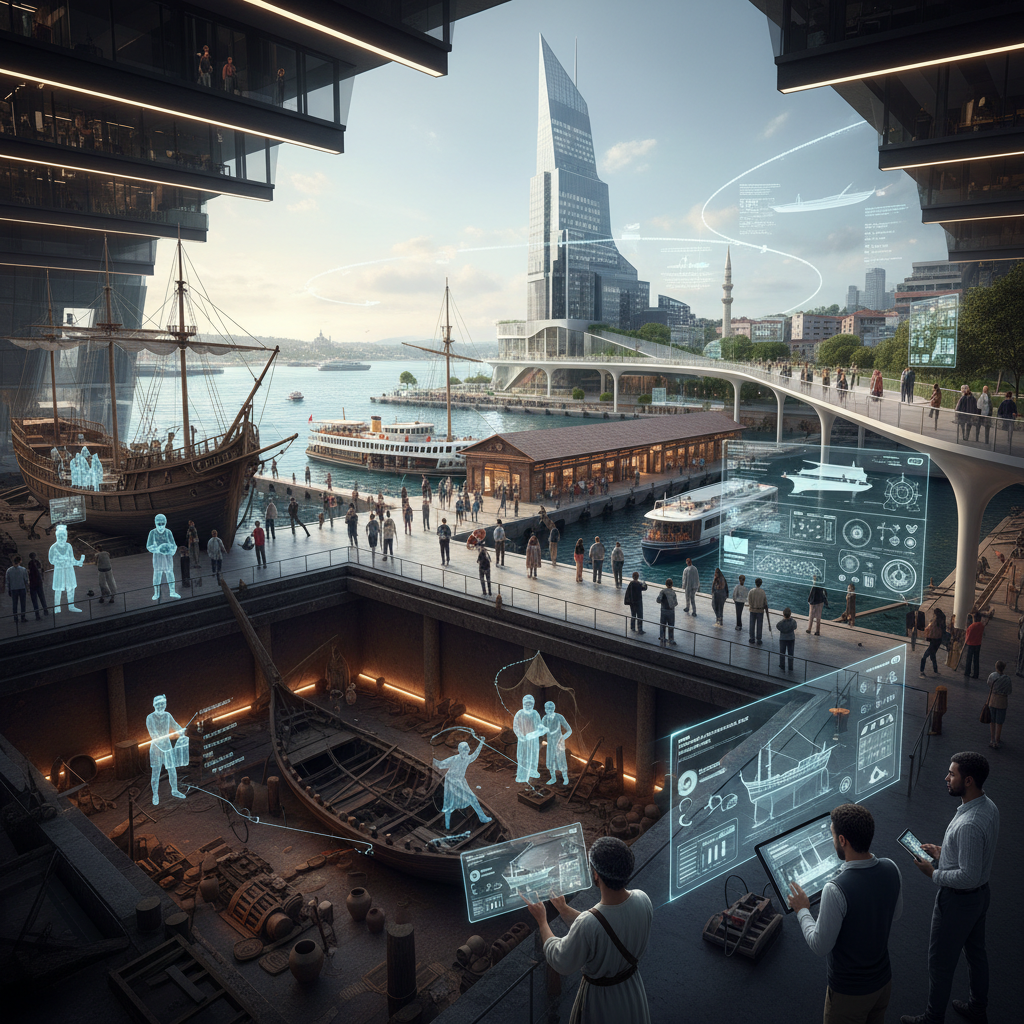
Golden Horn Maritime History: Unveiling Istanbul's Legacy
The Golden Horn maritime history tells a captivating tale of Istanbul, a city strategically positioned at the crossroads of continents. This natural harbor, a horn-shaped inlet of the Bosphorus, has been the lifeblood of empires, a bustling commercial hub, and a silent witness to centuries of human endeavor. From ancient galleys to modern ferries, its waters have continuously played a pivotal role in shaping the destiny of one of the world's most enthralling cities. As we navigate through 2026, the echoes of its past voyages still resonate, offering a profound understanding of Istanbul's enduring connection to the sea and its rich Golden Horn maritime history.
The Byzantine Era: Cradle of Golden Horn Maritime History
During the Byzantine period, the Golden Horn was not merely a harbor but the very heart of Constantinople's power and prosperity. Its sheltered waters provided an invaluable refuge for fleets, allowing the empire to project its influence across the Mediterranean and Black Sea. The intricate defense mechanisms developed to protect this vital waterway are legendary, forming a crucial part of the Golden Horn maritime history.
The Chain Across the Golden Horn
One of the most ingenious defensive strategies employed by the Byzantines was the massive chain stretched across the entrance of the Golden Horn. This formidable barrier, usually made of iron links and supported by floating pontoons, could block enemy ships from entering the inner harbor. Its historical significance is immense, demonstrating an advanced understanding of naval warfare for its time and contributing to the unique Golden Horn maritime history.
- Protected the city from naval attacks, particularly during sieges.
- Allowed for strategic control over maritime traffic.
- Played a crucial role in the city's defense against various invaders.
Byzantine Naval Power and Trade
The Byzantine navy, often based in the Golden Horn, was a dominant force in the Eastern Mediterranean for centuries. It facilitated extensive trade networks that brought immense wealth to Constantinople. Goods from across Asia, Europe, and Africa flowed through this bustling port, making it a truly cosmopolitan center.
The ships of the Byzantine Empire were not only instruments of war but also vehicles of cultural exchange and economic prosperity. Their designs and navigational techniques contributed significantly to the broader understanding of Golden Horn maritime history and the city's guilds.
Ottoman Supremacy and the Golden Horn's Continued Importance
With the conquest of Constantinople in 1453, the Golden Horn transitioned into an equally vital artery for the burgeoning Ottoman Empire. The Ottomans, a formidable naval power, recognized the strategic importance of this natural harbor immediately. They revitalized its infrastructure and expanded its role in their vast empire, further shaping the Golden Horn maritime history.
Ottoman Shipyards and Naval Innovation
The shores of the Golden Horn became home to extensive Ottoman shipyards, particularly those at Kasımpaşa. Here, skilled artisans constructed impressive galleys, caravels, and later, more advanced warships that would dominate the seas for centuries. The expertise developed in these shipyards marked a significant chapter in Golden Horn maritime history and Istanbul's ancient fortifications.
- Kasımpaşa Shipyard: A major naval hub for the Ottoman Empire.
- Production of formidable warships and merchant vessels.
- Employment of advanced shipbuilding techniques of the era.
Commercial Life and Maritime Crossings
Under Ottoman rule, the Golden Horn continued to thrive as a commercial nexus. Bridges began to span its waters, connecting different districts and facilitating greater movement of goods and people. The iconic Galata Bridge, in its various iterations, stands as a testament to this ongoing connectivity and its role in Golden Horn maritime history.
The movement of barges, small boats, and ferries became commonplace, illustrating the indispensable role of the waterway in daily urban life and commerce. This constant activity further cemented the Golden Horn's place in the city's maritime heritage. Find more about the bustling economic activities at Istanbul's historic bazaars and modern entrepreneurship.
Modernity and the Evolving Golden Horn Maritime History
As Istanbul entered the modern era, the nature of its relationship with the Golden Horn evolved. While its strategic military importance waned, its role as a transportation hub and a symbol of the city's identity only grew stronger. Today, in 2026, the Golden Horn continues to teem with life, albeit with different vessels and purposes, reflecting the ongoing evolution of its Golden Horn maritime history.
The Rise of Steam and Ferries
The 19th and 20th centuries saw the introduction of steamships, revolutionizing public transportation across the Bosphorus and the Golden Horn. The iconic Istanbul ferries, with their distinctive silhouettes, became an integral part of the city's charm and daily commute. These vessels represent a more accessible and democratized form of maritime travel for residents and visitors alike, adding new chapters to Golden Horn maritime history.
The continuous operation of these ferries highlights the enduring practical utility of the Golden Horn. They are not just a means of transport but cultural symbols themselves, offering unparalleled views of the city's historic skyline. Discover more about the city's evolving urban fabric on Istanbul's Ancient Roads & Modern Rhythms.
Current Development and Environmental Focus in Golden Horn Maritime History
In recent decades, significant efforts have been made to clean up the Golden Horn, which suffered from industrial pollution in the mid-20th century. These environmental initiatives have been largely successful, leading to a resurgence of marine life and making the waterway a more pleasant and healthy environment for both recreation and transportation. Environmental efforts are crucial, and global initiatives like those highlighted by the United Nations Environment Programme (UNEP) emphasize the importance of such projects worldwide, further influencing the Golden Horn maritime history.
Looking ahead to 2026, ongoing projects aim to further enhance the Golden Horn's ecological balance and integrate it more seamlessly into Istanbul's urban fabric. This includes developing new pedestrian areas along its banks and promoting sustainable maritime practices.
- Ongoing environmental restoration programs.
- Development of green spaces and public access points.
- Emphasis on sustainable urban planning around the waterway.
The Golden Horn's Cultural and Touristic Significance in 2026
Beyond its historical and practical utilities, the Golden Horn holds immense cultural and touristic value for Istanbul in 2026. It serves as a breathtaking backdrop for countless historical sites and offers unique perspectives of the city, deeply rooted in its Golden Horn maritime history.
Cruises and Historic Sightseeing
Today, tourist cruises ply the waters of the Golden Horn, offering visitors a unique vantage point to admire landmarks such as the Süleymaniye Mosque, Eyüp Sultan Mosque, and Galata Tower. These excursions provide a tangible connection to the rich Golden Horn maritime history, including its silent sentinels, allowing one to imagine the bustling activity of centuries past.
The blend of ancient architecture with the dynamic city life visible from the water provides an unforgettable experience. It reminds us that Istanbul’s story is inextricably linked to this vital waterway. For insights into modern urban planning impacting such waterfronts, sources like the World Cities website offer comparative studies.
Reflecting on a Maritime Legacy
The Golden Horn maritime history is a continuous narrative, perpetually unfolding with each passing year. From the strategic Byzantine chain to the modern-day commuter ferries, its waters have reflected the ambitions, triumphs, and daily lives of generations. It remains a powerful symbol of Istanbul's resilience and its deep, enduring connection to the sea, a connection that continues to define its identity even in 2026. Academic resources, such as journals found through Google Scholar, can provide further in-depth research on the maritime history of the region.
Exploring the Golden Horn is more than just observing a body of water; it's stepping into a living museum, where every ripple and current carries a piece of history. The tales of ancient ships and modern ferries weaving through its embrace paint a vivid picture of a city shaped by its unique geographical blessings and its profound Golden Horn maritime history.