Istanbul's Ancient Libraries & Unseen Scrolls: A Literary Detective's Guide for 2026
Step into a world where history whispers from dusty shelves and forgotten ink as we embark on a journey through Istanbul's ancient libraries. This magnificent city, a crossroads of empires and cultures, holds within its venerable walls a treasure trove of knowledge: texts that have shaped civilizations, illuminated philosophies, and preserved the human story. For the literary detective in 2026, exploring these historic repositories offers a unique blend of adventure, enlightenment, and a deep dive into the intellectual heart of Byzantium and the Ottoman Empire. Discover how these institutions stand as Istanbul's 'Library of the Winds': Unearthing Hidden Knowledge in Ancient Archives and Modern Digital Havens in 2026.
The Enduring Legacy of Istanbul's Ancient Libraries
Istanbul, formerly Constantinople, was for centuries a beacon of learning, attracting scholars, scribes, and philosophers from across the known world. Its libraries were not merely storage facilities for books; they were vibrant centers of intellectual exchange, where ideas were born, debated, and disseminated. These institutions played a pivotal role in preserving classical knowledge and fostering new scientific and artistic advancements. This intellectual vibrancy also extended to the city's Ancient Art of Persuasion, influencing public discourse and legal practices.
From the grandeur of imperial collections to the specialized holdings of madrasahs and dervish lodges, the concept of a library evolved significantly in this historic metropolis. Each institution tells a unique story of its patrons, its purpose, and the precious volumes it safeguarded. Understanding their historical context is key to appreciating their value today.
Tracing the Roots: Byzantine Collections
- Imperial Library of Constantinople: One of the greatest libraries of the ancient world, founded in the 4th century. It housed an unparalleled collection of Greek and Latin texts, crucial for the transmission of classical knowledge to the Renaissance. Sadly, much of it was lost through fires and conflicts.
- Patriarchal Library: Associated with the Ecumenical Patriarchate, this library contained theological and ecclesiastical works, as well as significant historical documents. Its collection continues to be an invaluable resource for religious scholars.
- Monastic Libraries: Numerous monasteries throughout Constantinople maintained their own libraries, often specializing in religious manuscripts, hagiographies, and philosophical treatises. These smaller, more secluded collections often preserved unique copies of texts.
The legacy of these early Istanbul's ancient libraries is immense, despite the ravages of time. Many texts copied in Constantinople found their way to Western Europe, fueling the revival of learning that defined the Renaissance. This period of intellectual flourishing also influenced the development of Istanbul's Ancient Engineering, leading to monumental architectural achievements.
Ottoman Eras: A Flourishing of Script and Scholarship in Istanbul's Ancient Libraries
With the conquest of Constantinople in 1453, the city’s intellectual landscape underwent a transformation, but the commitment to learning and the establishment of impressive libraries continued. The Ottoman sultans and their viziers were significant patrons of scholarship, commissioning new works and expanding existing collections.
Mosque complexes, madrasahs (theological schools), and even private residences became homes to extensive libraries. These institutions were not only repositories for religious texts but also for scientific, philosophical, literary, and historical works from across the Islamic world and beyond. The calligraphic beauty of these manuscripts often rivaled their intellectual content. This era also saw the meticulous design of Istanbul's Ancient Palaces, where many of these precious texts were housed.
Key Ottoman Library Institutions
Several institutions stand out for their historical importance and exceptional collections:
- Topkapi Palace Library: Located within the imperial residence, this library amassed an astonishing collection of manuscripts, atlases, and artworks over centuries. It was the private library of the Ottoman sultans and contains some of the most exquisite examples of Islamic calligraphy and illumination. Today, it offers a glimpse into the intellectual pursuits of the Ottoman court.
- Süleymaniye Library: Part of the magnificent Süleymaniye Mosque complex, this institution remains one of the most important manuscript libraries in the world. Established in the 16th century, it consolidates previous smaller library collections and continues to grow. Its holdings include rare Arabic, Persian, and Ottoman Turkish manuscripts on virtually every subject imaginable.
- Köprülü Library: Founded by the influential Köprülü family of viziers in the 17th century, this was the first public library of the Ottoman Empire. It houses a significant collection of manuscripts, distinguished by its strong emphasis on history and literature.
Many of these Istanbul's ancient libraries are still active research centers in 2026, offering scholars unparalleled access to their collections. The preservation efforts undertaken by the Turkish Ministry of Culture and Tourism ensure these invaluable resources endure.
The Unseen Scrolls: What Might Still Be Discovered in Istanbul's Ancient Libraries?
The romantic notion of "unseen scrolls" in Istanbul's ancient libraries is not entirely a fantasy. While major collections have been cataloged and digitized over the past decades, the sheer volume of material, combined with ongoing restoration and deeper archival research, means new discoveries are always possible. These might not always be entirely new texts, but perhaps previously unnoticed annotations, variant readings, or even fragments reassembled from dispersed collections.
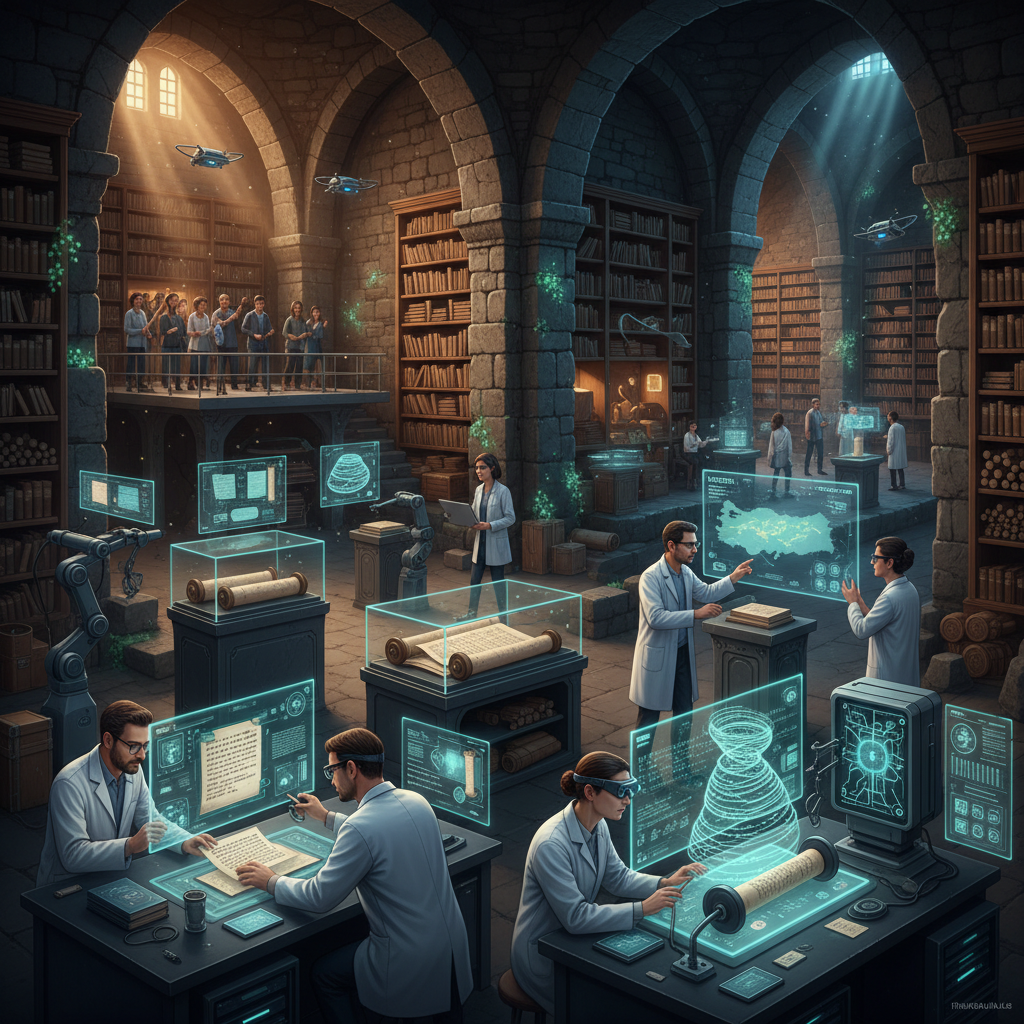
Digital humanities projects are increasingly employing advanced imaging techniques, such as multispectral imaging, to reveal text on damaged or overwritten manuscripts, hinting at layers of history invisible to the naked eye. This technological leap offers exciting prospects for uncovering hidden knowledge within these ancient volumes in 2026 and beyond. This ongoing exploration complements the vibrant scene of Istanbul's Living Libraries, including hidden bookstores and literary cafes.
Beyond the Shelves: Archives and Private Collections
- Ottoman Archives (Başbakanlık Osmanlı Arşivleri): While not strictly libraries, these vast archives contain millions of documents – firmans, edicts, court registers, correspondence – that collectively form an immense historical narrative. Researchers constantly unearth new details about daily life, political decisions, and economic affairs of the empire. For further details on this, you might explore resources like the Turkish State Archives website.
- Foundation (Vakıf) Libraries: Numerous smaller libraries were established through religious endowments (vakıf) by individuals or families. Many of these have been absorbed into larger public collections, but some remain dedicated, specialized entities, occasionally holding unique items.
- Private Family Libraries: Historically, wealthy and learned families maintained significant private collections. Some of these remain in private hands, their full breadth and content not entirely known to the wider scholarly community, offering the tantalizing possibility of future public access or discovery.
The ongoing work of cataloging, digitization, and scholarly research ensures that the stories held within Istanbul's ancient libraries continue to unfold. Every new finding contributes to a richer understanding of human history and intellectual lineage. This continuous quest for knowledge also makes one ponder the history of Istanbul's Ancient Maps and Modern Cartography, reflecting how information has been collected and preserved over millennia.
Visiting Istanbul's Ancient Libraries as a Literary Detective in 2026
For the curious traveler or aspiring literary detective, engaging with Istanbul's ancient libraries is a profoundly enriching experience. While direct access to precious manuscripts might be restricted to accredited scholars for preservation reasons, many institutions offer exhibition halls, guided tours, and digital resources that make their collections accessible to the public.
Planning your visit in 2026 involves some research, but the rewards are immense. Imagine tracing the footsteps of countless scholars, scribes, and sultans as you observe the very volumes they once held. This tactile connection to history breathes life into the academic pursuit. For academic resources on the history of libraries, a good starting point is the NYU Institute of Fine Arts Library.
Tips for the Modern Explorer
- Check Access Policies: Each library has specific rules regarding visitors, researchers, and photography. Always consult their official websites or contact them in advance.
- Explore Digital Collections: Many major libraries, including the Süleymaniye Library, have extensive digital catalogs and scanned manuscripts available online. This allows for preliminary research and a deeper understanding before your physical visit.
- Visit Exhibition Halls: Publicly accessible sections often display illuminated manuscripts, rare books, and significant documents, providing an excellent overview of the library's treasures.
- Consider Guided Tours: Some larger institutions offer guided tours that provide context and highlight key aspects of their collections and history.
- Be Respectful: Remember these are not just tourist attractions but active centers of learning and heritage preservation. Observe silence, avoid flash photography where prohibited, and treat staff and fellow visitors with respect.
Engaging with Istanbul's ancient libraries offers more than just a historical excursion; it's an immersive dive into the intellectual soul of a city that has championed knowledge for millennia. The thrill of discovery, whether it's a new insight from a displayed exhibit or a deeper appreciation for the painstaking craft of ancient scribes, awaits every literary detective in 2026.