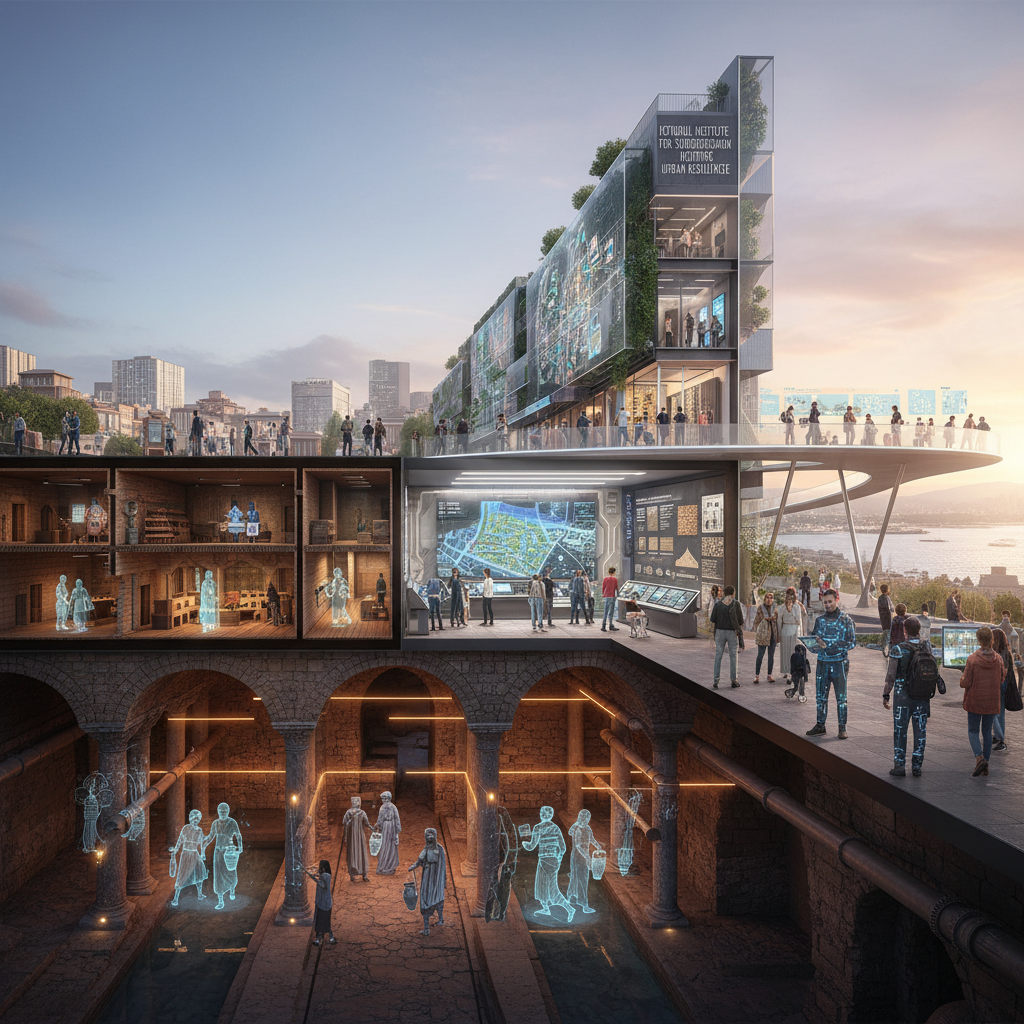
Istanbul's Ancient Palimpsest: Unearthing Layers of Forgotten Cities Beneath the Modern Metropolis in 2026
Istanbul, a city where continents collide and empires rise and fall, remains an unparalleled treasure trove for historians and archaeologists. In 2026, the relentless pace of urban development continues to unveil breathtaking discoveries, further enriching our understanding of this ancient palimpsest. This article delves into the exciting developments in Istanbul archaeology 2026, exploring how modern techniques and ongoing excavations are illuminating the forgotten layers beneath the vibrant contemporary city. From its origins as Byzantium to its grandeur as Constantinople and its current status as Istanbul, every street corner seems to hold a story waiting to be dug up.
For a deeper dive into the city's architectural past, explore Istanbul's Ancient Fortifications, which reveal the robust defenses that protected these successive empires. Likewise, the intricate Istanbul's Ancient Palaces & Hidden Harem Tales offer a window into imperial life.
The Ongoing Story of Istanbul Archaeology 2026: Major Discoveries and Sites
The year 2026 marks a pivotal period for archaeological pursuits in Istanbul. Urban infrastructure projects, while challenging, frequently offer invaluable opportunities for uncovering ancient remains. These discoveries continually reshape our understanding of the city's complex past.
For instance, the ongoing Marmaray metro line extensions, a mega-project connecting both sides of the Bosphorus, have consistently yielded significant finds since their inception. The Yenikapı excavations, stemming from these very projects, became one of the largest archaeological sites globally. They provide an unprecedented cross-section of Istanbul's history. For another perspective on how the city's infrastructure evolves, consider Istanbul's Ancient Roads & Modern Rhythms.
Yenikapı: A Window into Byzantium and Beyond
Yenikapı remains a cornerstone of Istanbul archaeology 2026. The excavation site has revealed not just the Theodosian Port, one of the greatest Byzantine harbors, but also a staggering collection of shipwrecks. These 37 well-preserved vessels offer direct insight into maritime trade and shipbuilding technology from the 5th to the 11th centuries AD.
- Over 37 historically significant shipwrecks identified.
- Insights into Byzantine naval architecture and trade routes.
- Evidence of the earliest known human settlement in Istanbul, dating back 8,500 years.
- Ongoing research into the recovered artifacts continues to inform new theories.
Beyond the Byzantine era, Yenikapı has also unearthed Neolithic settlements, pushing back the city's known human habitation by millennia. This continuous revelation of deeper layers makes Yenikapı a focal point for researchers worldwide. Intriguing connections to the city's seafaring past can also be found in Istanbul's Ancient Harbors & Maritime Tales.
Excavations Under Major Urban Renewal Projects
Other significant projects across Istanbul are similarly yielding fascinating finds in 2026. Areas earmarked for new construction or public space development are often preceded by mandatory archaeological surveys. This proactive approach ensures that historical heritage is identified and protected before permanent changes occur.
Recent work around historical mosques and cisterns has also brought to light new structural elements and artifacts. These discoveries often clarify previous historical records or even challenge long-held assumptions about the city's development and architectural evolution. Speaking of ancient structures, the Istanbul's Ancient Cisterns are another marvel beneath the city streets.
Technological Advancements Revolutionizing Istanbul Archaeology
The field of archaeology is constantly evolving, with new technologies offering unprecedented ways to explore and interpret historical sites. In 2026, Istanbul leverages cutting-edge tools to enhance its archaeological efforts.
Ground Penetrating Radar (GPR) and magnetometry are now standard practice in preliminary surveys. These non-invasive techniques allow archaeologists to map underground structures without disturbing the surface. This is particularly crucial in a dense urban environment like Istanbul, where extensive excavation is often impractical.
3D Modeling and Virtual Reconstruction in 2026
The use of 3D modeling and virtual reality (VR) has transformed how past sites are understood and presented. Archaeologists can now create highly accurate digital replicas of excavated structures and artifacts. These models aid in research and also provide immersive experiences for the public.
- Digital preservation of fragile ruins and artifacts.
- Virtual tours of reconstructed ancient Istanbul.
- Enhanced educational resources for students and researchers.
These advanced visualization tools are integral to sharing the rich stories unearthed by Istanbul archaeology 2026 with a global audience, making arcane historical data accessible and engaging. For more on historical narratives, delve into Istanbul's Ancient Narratives.
Challenges and Conservation Efforts in Istanbul Archaeology 2026
Despite the excitement of new discoveries, archaeological work in Istanbul faces unique challenges. The rapid pace of urban development inevitably puts pressure on historical sites. Balancing progress with preservation requires careful planning and robust legal frameworks. Information on similar challenges globally can be found at ICOMOS's insights on archaeological heritage management.
Conservation is paramount when dealing with fragile ancient remains. The climatic conditions of Istanbul, coupled with environmental factors, necessitate ongoing efforts to protect unearthed structures and artifacts from decay. Specialized conservation teams work tirelessly to ensure the longevity of these invaluable pieces of history.
Protecting Underwater Heritage
Given Istanbul's strategic maritime location, underwater archaeology is a critical component of its heritage. The Bosphorus and the Sea of Marmara hold countless secrets. Protecting submerged sites from pollution, dredging, and uncontrolled salvage operations is an ongoing challenge. Dedicated marine archaeology units are actively involved in survey, excavation, and conservation efforts.
These units utilize remotely operated vehicles (ROVs) and specialized diving equipment to explore deep-water sites. Their work is crucial for understanding the ancient shipping routes and naval history unique to Istanbul archaeology 2026. Securing funding for such specialized operations remains a constant concern. The UNESCO Convention on the Protection of the Underwater Cultural Heritage provides international guidelines for these efforts.
Future Prospects for Istanbul Archaeology 2026 and Beyond
The future of Istanbul archaeology 2026 looks incredibly promising. As the urban fabric continues to evolve, so too will the opportunities for discovery. International collaborations are also playing an increasingly vital role, bringing diverse expertise and resources to the city's complex archaeological landscape.
Educational initiatives aimed at raising public awareness about Istanbul's rich heritage are also gaining momentum. Engaging local communities in the discovery process fosters a sense of ownership and responsibility for preserving these cultural treasures. Tour guides, travel agencies, and even social media influencers are increasingly highlighting the archaeological wonders. For general information on archaeological organizations, visit the Archaeological Institute of America.
Unlocking the Secrets of the Great Palace
The Great Palace of Constantinople, once the primary imperial residence of the Byzantine Emperors, still holds many secrets beneath modern Istanbul. While much of it has been built over, targeted excavations in specific areas continue to reveal tantalizing clues about its structure and daily life. The remains currently visible to the public offer a mere glimpse of its former glory.
Further investigations using non-invasive techniques could map out larger sections of the palace complex. This would provide invaluable data for future preservation or limited reconstruction projects, greatly enhancing our appreciation of Byzantine imperial power. The discovery of various artifacts can also shed light on Istanbul's Ancient Aquariums, showcasing the leisure and scientific interests of its former inhabitants.
Experiencing Istanbul's Archaeological Wonders in 2026
For visitors to Istanbul in 2026, the city offers an unparalleled opportunity to connect with its ancient past. Beyond the iconic Hagia Sophia and Blue Mosque, numerous museums and archaeological parks showcase the results of decades of excavation. The Istanbul Archaeology Museums, for instance, houses an extraordinary collection spanning millennia.
Walking through the old city, one can still stumble upon Roman columns, Byzantine cisterns, and Ottoman foundations subtly interwoven into the modern streetscape. Guided tours specifically focused on archaeological sites provide deeper insights into these layers of history. This makes Istanbul not just a destination for sightseers, but a truly immersive historical experience.