Istanbul Sacred Sounds: Tracing the Spirit of Adhan, Sufi Chants & Sanctuary Melodies in 2026
Stepping into Istanbul in 2026 is an immersion not just in history and vibrant culture, but in a profound auditory experience. The city, a crossroads of continents and civilizations, resonates with its unique aural tapestry. Among these, the Istanbul sacred sounds stand out, weaving together the calls to prayer, the hypnotic rhythms of Sufi ceremonies, and the serene melodies echoing within its ancient sanctuaries. These sounds are more than just noise; they are the living breath of a city deeply rooted in spiritual devotion and historical grandeur. For a broader understanding of the city's acoustics, consider exploring Istanbul's Soundscapes: A Sonic Journey Through the City's Melodies and Rhythms in 2026.
The Ethereal Call: Adhan as a Signature of Istanbul Sacred Sounds
The call to prayer, or Adhan, is arguably the most recognized of Istanbul sacred sounds. Five times a day, from hundreds of minarets across the city, the melodious voices of muezzins float through the air, signaling prayer times. This ancient tradition, unchanged for centuries, grounds the city in its spiritual heritage.
In 2026, while modern technology often amplifies these calls, the human element remains paramount. Each muezzin brings their unique vocal quality and interpretation, creating a diverse soundscape that is both unifying and deeply personal. It's an auditory landmark that defines the city's rhythm.
The Historical Significance of the Adhan
- The Adhan’s origins trace back to the early days of Islam, serving as a powerful communal message.
- Historically, special muezzins with exceptional voices were sought for prominent mosques.
- Listening to the Adhan from Sultanahmet Square, surrounded by the Blue Mosque and Hagia Sophia, offers an unparalleled experience to grasp the essence of Istanbul sacred sounds.
Experiencing the Adhan Today
Tourists and locals alike often pause to listen when the Adhan begins. It’s a moment of reflection, a reminder of the city’s enduring faith. Whether drifting across the Bosphorus or echoing through a bustling bazaar, this sound is an indelible part of Istanbul's identity. Understanding its significance enriches any visit to this magnificent metropolis. For more on the city's spiritual depth, delve into Istanbul's Ancient Healing Sanctuaries: Exploring Historic Hospitals, Hamams & Holistic Wellness in 2026.
Sufi Chants and Whirling Dervishes: Mystical Istanbul Sacred Sounds
Beyond the resonating Adhan, another profound layer of Istanbul sacred sounds can be found in the mystical traditions of Sufism. The chanting and devotional music of Sufi orders, particularly the Mevlevi Dervishes, offer a mesmerizing glimpse into a spiritual realm focused on love, tolerance, and divine union.
The hypnotic rhythm of the ney (reed flute) and ceremonial chants during a sema (whirling dervish ceremony) are deeply moving. These performances are not mere spectacles but rather a form of active meditation, an attempt to reach a state of ecstatic connection with the divine.
The Mevlevi Order and Rumi's Legacy
The Mevlevi Order, founded by the followers of the 13th-century Persian poet and theologian Jalal ad-Din Muhammad Rumi, emphasizes love, tolerance, and the pursuit of divine truth through music, poetry, and the famous whirling ceremony. Their profound contributions shape the soundscape of Istanbul sacred sounds.
In 2026, several cultural centers and dervish lodges (tekkes) in Istanbul host regular sema performances, offering visitors a chance to witness this ancient tradition firsthand. It’s an experience that transcends language, communicating directly with the soul. Further insights into the city's musical landscape can be found in Istanbul's Music Scene: From Traditional Turkish Melodies to Contemporary Sounds.
Musical Instruments and Their Spiritual Role
- Ney: The melancholic yet inspiring sound of the ney often symbolizes the soul's yearning for God.
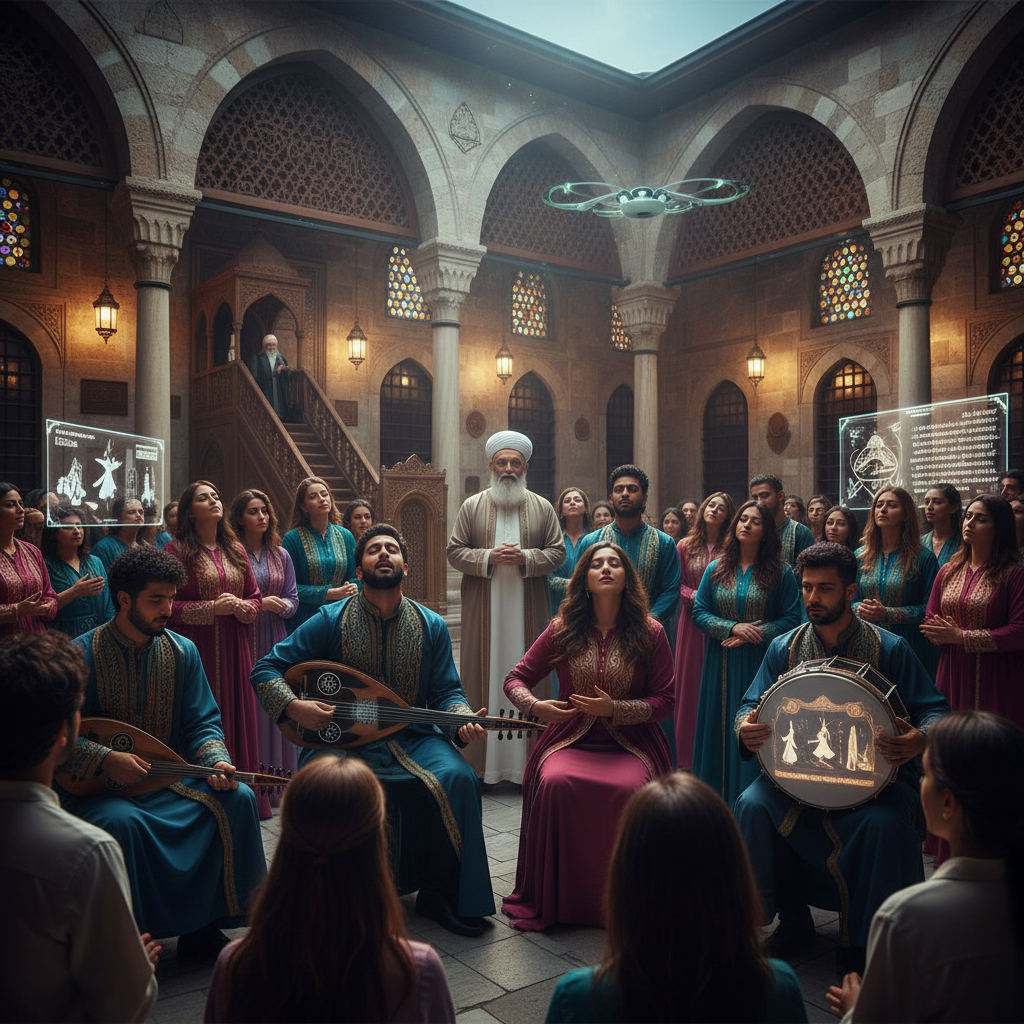
- Kudüm: Small double drums that provide the rhythmic heartbeat of the ceremony.
- Bendire: A frame drum that adds further depth to the percussive elements, contributing to the rich tapestry of Istanbul sacred sounds.
These instruments, played with exceptional skill and devotion, create an atmosphere of reverence and spiritual upliftment. The communal chanting during other Sufi gatherings (dhikr) also contributes to this rich sonic tradition.
Sanctuary Melodies: Echoes from Mosques and Churches in 2026
Istanbul's identity as a city of convergence is also reflected in the diverse sanctuary melodies that contribute to the broader canvas of Istanbul sacred sounds. While predominantly Muslim, the city is home to ancient Christian churches and Jewish synagogues, each echoing with their distinct hymns, prayers, and liturgical music.
The solemn chants within the majestic Hagia Sophia (now a mosque again), the intricate Byzantine hymns sung in Orthodox churches, or the ancient Sephardic melodies found in historic synagogues all add layers to the city’s spiritual auditory heritage. This coexistence of diverse sacred sounds is a testament to Istanbul's enduring multicultural fabric.
Hagia Sophia: A Symphony of History
Once a church, then a mosque, then a museum, and now once again a mosque as of 2026, Hagia Sophia's grand dome has witnessed centuries of different sacred sounds. Today, the call to prayer and recitations of the Quran fill its immense space, offering a truly unique sonic experience. The acoustics of this architectural marvel amplify every sound, making the spiritual experience even more profound.
Byzantine Chants in Orthodox Churches
Hidden in various neighborhoods, Istanbul's Greek Orthodox churches continue their ancient traditions. Visitors to places like the Ecumenical Patriarchate in Fener might experience the ethereal beauty of Byzantine chants during services. These ancient forms of vocal music, often sung a cappella, represent a continuous link to Istanbul's deep Christian past and are an integral part of Istanbul sacred sounds.
Preserving the Istanbul Sacred Sounds in a Modern Era
In 2026, as Istanbul continues its rapid modernization, there is a growing awareness and effort to preserve and promote these invaluable Istanbul sacred sounds. Cultural institutions, government initiatives, and local communities are actively working to ensure these traditions are not overshadowed by the clamor of contemporary life.
From digital archives documenting ancient chants to workshops for young muezzins and traditional musicians, the commitment to safeguarding this auditory heritage is strong. These efforts ensure that future generations will also be able to experience the spiritual depth embedded within the city's soundscape.
Cultural Initiatives and Festivals
- Many festivals in Istanbul, particularly those focusing on Sufi music and classical Turkish music, highlight sacred sounds.
- Concerts featuring traditional instruments like the kanun (zither) and oud (lute) often include devotional pieces.
- Educational programs are being developed to teach children and adults about the history and significance of the Adhan and Sufi music. Interested readers can explore more about traditional art forms at Traditional Turkish Storytelling and Performance Arts in Istanbul.
The Role of Technology in Preservation
While often seen as a force for change, technology is also playing a crucial role in the preservation of Istanbul sacred sounds. High-quality recordings of historical performances, digital libraries of scores and chants, and online educational resources are making these rich traditions accessible to a global audience. This ensures that the spiritual melodies of Istanbul echo far beyond its ancient walls. For an example of initiatives promoting cultural learning, consider organizations like UNESCO, which often supports the preservation of intangible cultural heritage.
In conclusion, the Istanbul sacred sounds are an indispensable part of the city's soul. From the omnipresent Adhan to the mystical Sufi chants and the diverse melodies found within its sanctuaries, these sounds offer a unique window into Istanbul's historical depth, cultural richness, and enduring spiritual heart. To truly experience Istanbul in 2026 is to open one's ears to this exquisite symphony of faith and heritage. For a deeper dive into the city's religious history, the Go Istanbul Blog provides further context. Moreover, research from institutions like The Metropolitan Museum of Art often offers academic perspectives on Sufi traditions and their art forms.