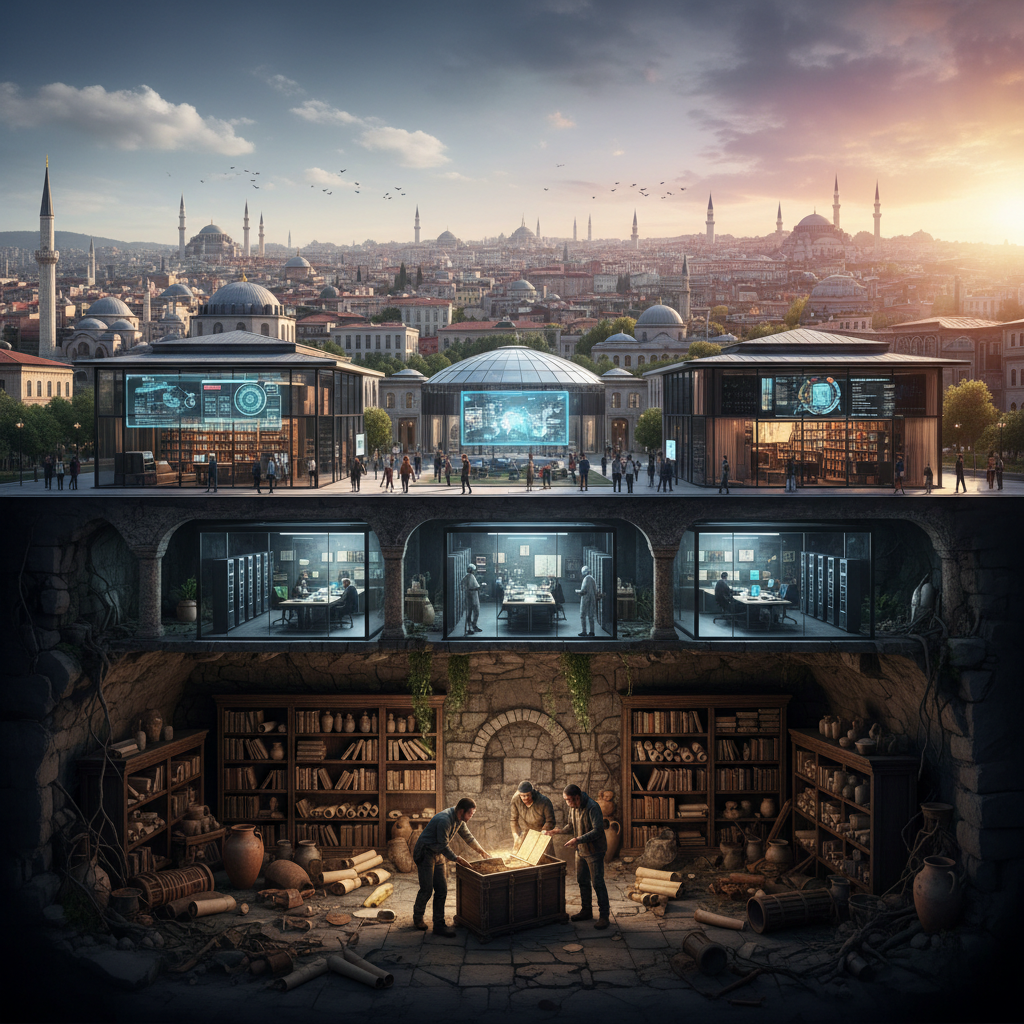
Istanbul's Ancient Libraries: Unearthing Scholarly Legacies
As we navigate through 2026, the allure of historical discovery continues to captivate, and few cities offer as rich a tapestry of the past as Istanbul. From the grandeur of its imperial palaces to the serene beauty of its mosques, every corner whispers tales of bygone eras. Among these treasures are the remnants and legacies of Istanbul ancient libraries, institutions that once housed the collective wisdom of empires. These centers of learning, often interwoven with mosques, madrasas, and palatial complexes, were not merely repositories of books but vibrant hubs of intellectual exchange, shaping the course of knowledge for centuries. Exploring these ancient libraries reveals the profound scholarly heritage of this historic city.
The Golden Age of Istanbul Ancient Libraries
Istanbul, formerly Constantinople, stood as a beacon of scholarship for millennia. Its strategic location at the crossroads of East and West made it a melting pot of cultures and ideas, inevitably leading to the establishment of magnificent libraries. These institutions served as critical bridges connecting classical antiquity with the flourishing Islamic Golden Age and later, the Ottoman Empire. The legacy of these Istanbul ancient libraries is truly remarkable.
Byzantine Scholarly Paradises
Before the Ottoman conquest, Byzantine Constantinople boasted several significant libraries. The Imperial Library of Constantinople, founded in the 4th century, was perhaps the most famous. It was renowned for its vast collection of Greek and Latin manuscripts, including many classical texts that would otherwise have been lost to history. Scholars meticulously copied and preserved these invaluable works:
- The Library of the Patriarchate housed theological and ecclesiastical texts.
- Various monasteries maintained their own extensive collections, contributing to the city's intellectual wealth.
The commitment to learning during the Byzantine era laid a foundational layer for the intellectual vibrancy that would continue under Ottoman rule. For a broader understanding of how history is literally layered in Istanbul, explore Istanbul's Ancient Palimpsest.
Ottoman Libraries: Guardians of Global Knowledge
With the conquest of Constantinople in 1453 by Sultan Mehmed II, the city, now Istanbul, embarked on a new golden age of intellectual flourishing. The Ottomans, recognizing the importance of knowledge, actively established and supported numerous libraries. These institutions often supplemented the existing collections and added vast numbers of Arabic, Persian, and Turkish manuscripts, further enriching the heritage of Istanbul ancient libraries.
Architectural Marvels and Scholarly Hubs
Many Ottoman libraries were integrated into larger külliyes (mosque complexes), reflecting the holistic approach to education and faith. The Fatih Mosque Complex, for instance, established by Mehmed the Conqueror, included a significant library. Other notable examples include:
- Süleymaniye Library: Part of the Süleymaniye Mosque Complex, this library quickly became one of the most prominent, housing an unparalleled collection of Islamic manuscripts. Its holdings are still studied by researchers globally in 2026.
- Köprülü Library: This was the first dedicated independent library building in the Ottoman Empire, founded by the grand vizier Köprülü Mehmed Pasha in the 17th century.
- Ragıp Pasha Library: Another significant independent library established by a grand vizier, known for its extensive collection of rare books and manuscripts.
These Istanbul ancient libraries were meticulously organized, with detailed catalogs and dedicated staff, making them crucial centers for scholars from across the empire and beyond. Their influence on fields like mathematics and astronomy, often documented in their preserved texts, can be further explored in our article on Decoding Byzantine Astronomy.
Lost Scrolls and New Discoveries in Istanbul's Ancient Libraries
The concept of "lost scrolls" evokes a sense of mystery and the tantalizing possibility of unearthing forgotten knowledge. While no dramatic discovery of a trove of scrolls comparable to the Dead Sea Scrolls has occurred in Istanbul recently, archaeological efforts and ongoing research within existing collections continue to yield fascinating insights into these Istanbul ancient libraries.
Digitalization and Rediscovery
In 2026, many of the collections from Istanbul ancient libraries are undergoing extensive digitalization. This process not only preserves old manuscripts but also makes them accessible to a global audience of scholars. Researchers are constantly sifting through these digital archives, sometimes uncovering previously unstudied works or re-evaluating known texts with fresh perspectives. For example, recent analyses of marginalia in Ottoman-era books stored in various Turkish libraries have shed new light on intellectual networks and scholarly debates of the time. This modern approach to preserving ancient wisdom reflects a broader trend of bridging the past and present, much like the city's connection between Ancient Script and Modern Typography.
Ongoing Archaeological Endeavors
While the physical locations of many ancient libraries are known, ongoing urban development and archaeological excavations in Istanbul occasionally reveal new glimpses into the city's past. Though often fragments, these discoveries can sometimes point to overlooked annexes, smaller private collections, or even unrecorded scholarly activities. The consistent efforts by the Directorate General of Libraries and Publications, alongside academic institutions, ensure that the legacy of these ancient intellectual centers is never truly forgotten. For more information on Turkey's library digitalization initiatives, visit the Turkish Ministry of Culture and Tourism's website.
The Legacy and Influence of Istanbul Ancient Libraries
The impact of Istanbul ancient libraries stretches far beyond their physical walls and the centuries they actively operated. Their contributions to diverse fields of knowledge are immense and continue to resonate today.
Preservation of Knowledge
These libraries played a pivotal role in preserving not only religious and philosophical texts but also scientific, mathematical, medical, and astronomical works. Many ancient Greek texts, for example, were preserved through Arabic translations within Ottoman libraries, only to be rediscovered by European scholars centuries later.
Catalysts for Innovation
By bringing together scholars and vast collections, these libraries fostered an environment ripe for intellectual growth and innovation. Debates and discussions sparked within their halls led to new theories, inventions, and artistic expressions. The synthesis of Eastern and Western thought, nurtured in these institutions, created a unique intellectual tradition.
Modern-Day Relevance
Today, the Süleymaniye Manuscript Library stands as a testament to this incredible heritage, holding one of the world's most significant collections of Islamic manuscripts. Researchers from around the globe visit Istanbul to consult these priceless documents, which offer invaluable insights into history, philosophy, science, and the arts. The spirit of these Istanbul ancient libraries continues to inspire new generations of scholars in 2026, reminding us of the enduring power of knowledge.
Exploring Istanbul's Modern Libraries: A Continuum of Tradition
While the focus here has been on the ancient past, Istanbul continues its rich tradition of fostering learning and preserving knowledge into the modern era. Contemporary libraries in the city serve as vibrant centers for research, education, and community engagement, building upon the foundations laid by their historical predecessors.
Notable Modern Institutions
- Presidential Library: Opened in 2020, this monumental library in Ankara (though not in Istanbul, it represents Turkey's modern commitment) and specialized libraries within Istanbul like the Beyazıt State Library or the Istanbul University Library, continue to uphold the legacy of scholarship.
- Millet Library: A modern landmark in Istanbul, it showcases state-of-the-art facilities while honoring the city's intellectual heritage.
These institutions, along with numerous public and university libraries, ensure that Istanbul remains a city deeply intertwined with books, learning, and the pursuit of knowledge, carrying forward the torch ignited by the ingenious Istanbul ancient libraries. For those interested in the future of libraries and digital humanities, the International Federation of Library Associations and Institutions (IFLA) provides global insights.