Istanbul Historical Lighting: From Ancient Glow to Modern Brilliance
Step into a world where history illuminates every corner, where ancient traditions blend seamlessly with contemporary brilliance. Welcome to Istanbul, a city where the story of light is as rich and multifaceted as its past. From Byzantine mosaics that once glimmered under oil lamps to Ottoman mosques adorned with ornate chandeliers, the evolution of Istanbul historical lighting is a captivating journey through time. This comprehensive guide will explore how various eras shaped the city's luminous character and how these historical influences continue to inspire modern illumination trends in 2026.
To further understand how Istanbul integrates its past with the present, consider exploring Istanbul's Ancient Palimpsest: Unearthing Layers of Forgotten Cities Beneath the Modern Metropolis in 2026, which delves into the layers built upon its historical foundations.
The Dawn of Illumination: Byzantine and Roman Roots of Istanbul Historical Lighting
Before Istanbul was Istanbul, it was Constantinople, and before that, Byzantium. These foundational eras laid the groundwork for much of the city's enduring charm, including its approach to functional and decorative lighting. Early Roman and Byzantine lighting was often practical, with oil lamps being the predominant source of artificial light. This early period significantly shaped the trajectory of Istanbul historical lighting.
These simple yet effective devices were crucial for daily life, illuminating homes, public baths, and religious edifices. The materials ranged from terracotta to bronze, often featuring intricate designs that hinted at the owner's status or the building's purpose.
Byzantine Mosaics and Their Luminous Effect
One cannot discuss Byzantine illumination without mentioning the breathtaking mosaics. While not direct light sources, these shimmering artworks were designed to catch and reflect available light, whether from oil lamps, candles, or daylight filtering through windows. The gold tesserae, in particular, created a mesmerizing glow that amplified the spiritual atmosphere of churches like Hagia Sophia, contributing to the unique character of Istanbul historical lighting.
- Oil Lamps: Commonplace in homes, markets, and early Christian basilicas.
- Bronze Chandeliers: Often found in grander establishments, holding multiple oil lamps or candles.
- Reflective Surfaces: Mosaics and polished marble walls maximized the impact of limited light sources.
The Legacy of Roman Street Lighting
Even in rudimentary forms, the concept of public lighting had its beginnings in the Roman era. While not as sophisticated as modern systems, torches and strategically placed lanterns provided some level of safety and guidance after dark. This rudimentary approach to urban illumination played a role in the very early days of Istanbul historical lighting.
For more insights into the daily life and infrastructure of ancient Istanbul, explore Istanbul's Ancient Cisterns: Unveiling Subterranean Wonders & Echoes of Byzantium in 2026.
Ottoman Grandeur: Lamps, Lanterns, and the Art of Illumination in Istanbul
With the conquest of Constantinople by the Ottomans in 1453, a new era of lighting dawned, characterized by opulence, artistry, and a unique architectural style. Ottoman lighting was not merely functional; it was an integral part of the aesthetic and spiritual experience of their buildings, particularly mosques and palaces.
The ingenuity and craftsmanship involved in creating these luminous displays were remarkable. From delicate glass lamps imported from Venice to locally crafted metal lanterns, the Ottomans elevated illumination to an art form, influencing Istanbul historical lighting for centuries.
The role of light extended beyond mere aesthetics; it helped define spaces and highlight intricate details, much like Istanbul's Ancient Script: Unveiling Traditional Calligraphy and Modern Typography in 2026 defined identity and artistry.
Mosque Lighting: A Symphony of Light and Shadow
Ottoman mosques are perhaps the most iconic examples of Istanbul historical lighting. Vast, echoing spaces were meticulously designed to be bathed in a soft, ethereal glow. This was achieved through massive concentric rings of oil lamps, candles, and later, early gas lighting, suspended from intricately decorated chandeliers.
- Large Chandeliers: Often made of brass or copper, adorned with glass globes, holding numerous light sources.
- Oil Lamps (Kandil): Small, suspended oil lamps, carefully arranged to create patterns and diffuse light.
- Stained Glass Windows: Filtered natural light during the day, adding to the spiritual ambiance.
The Blue Mosque (Sultan Ahmed Mosque) is a prime example, where hundreds of glass lamps once created a celestial dome of light, reflecting off the exquisite Iznik tiles, showcasing the pinnacle of Istanbul historical lighting design.
Palace Illuminations and Daily Life
Beyond mosques, Ottoman palaces like Topkapi and Dolmabahçe showcased lavish lighting. Crystal chandeliers, often gifts from European monarchs, illuminated grand halls, while smaller, more intimate lanterns graced private apartments. Even in common households, beautifully crafted copper and brass lanterns were ubiquitous, providing warmth and light during long Istanbul nights. The evolution of Istanbul historical lighting in these settings tells tales of courtly life and domestic warmth.
To learn more about the opulent settings these lights once illuminated, read about Istanbul's Ancient Palaces & Hidden Harem Tales: A Glimpse into Imperial Life in 2026.
The Transition to Modernity: Gaslight to Electricity in Istanbul
The late 19th and early 20th centuries brought significant technological advancements that revolutionized lighting in Istanbul, mirroring global trends. The introduction of gaslight was a major step, followed rapidly by the advent of electricity, forever changing the cityscape after dark. This period was crucial in shaping modern Istanbul historical lighting.
This period of transition marked a fascinating blend of old and new. While traditional oil lamps and candles still held their place in many homes, main arteries and public buildings began to glow with the brighter, more consistent light of gas and eventually, electricity. The shift irrevocably altered the landscape of Istanbul historical lighting.
Gaslight Era: Illuminating Public Spaces
Gas lighting first appeared in Istanbul in the mid-19th century, primarily illuminating important public buildings and main streets. The sight of gas lamps flickering along the Bosporus or in bustling marketplaces became a symbol of modernization. These ornate streetlights, often made of cast iron, added a new dimension to urban aesthetics.
Although eventually superseded, the gaslight era left an indelible mark on the memory of old Istanbul, contributing a unique chapter to the story of Istanbul historical lighting.
The Arrival of Electric Light
Electricity arrived in Istanbul in the early 20th century, initially powering trams and then gradually making its way into homes and businesses. The speed and efficiency of electric illumination quickly made it the dominant form of lighting. From bustling Beyoğlu to the historic Sultanahmet district, electric lights started to replace their predecessors, bringing brighter, cleaner light to larger areas, further evolving Istanbul historical lighting.
For a contemporary look at global lighting trends, a visit to Light + Building, a leading international trade fair for lighting and building services technology, can highlight modern innovations that Istanbul continues to adopt.
Preserving the Past, Lighting the Future: Istanbul's Contemporary Illumination in 2026
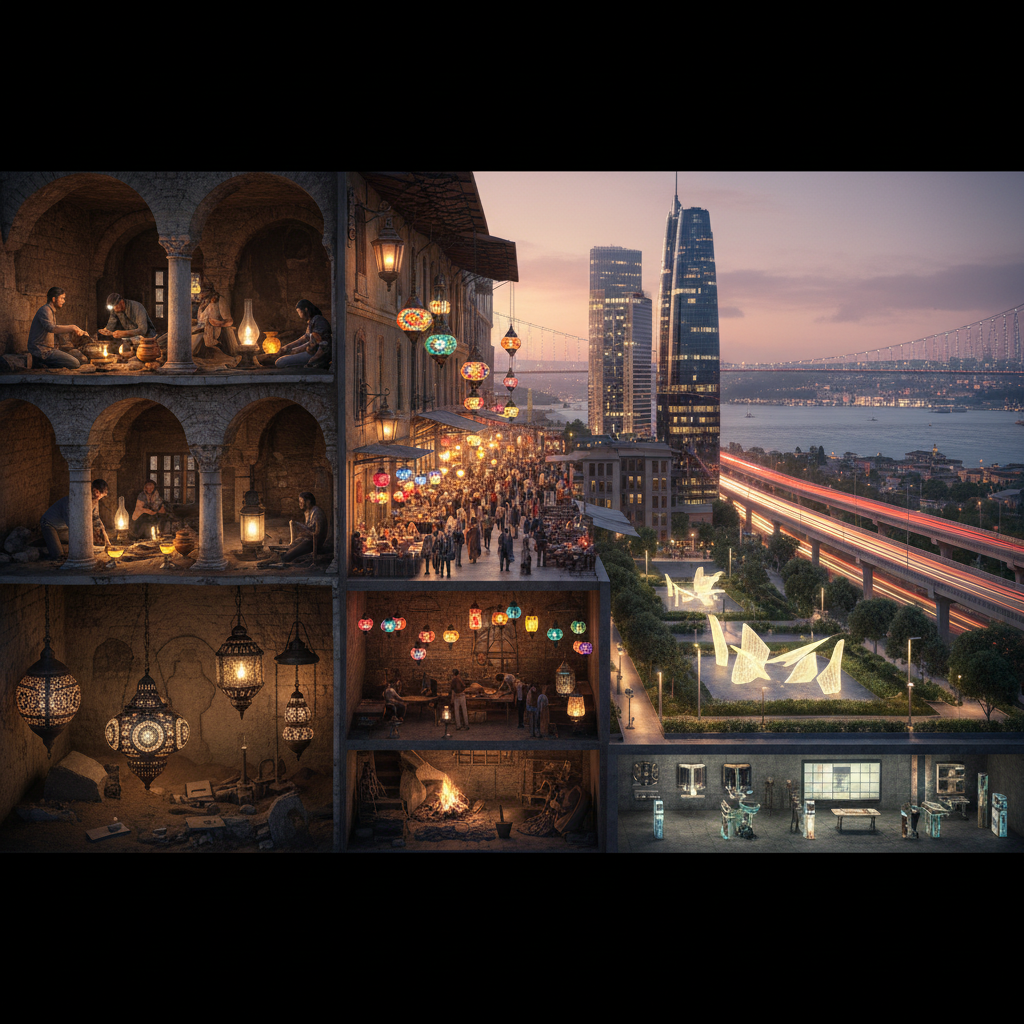
In 2026, Istanbul stands as a living testament to its luminous past. While ultra-modern LED installations light up skyscrapers and bridges, there's a profound respect for the city's heritage. Many historical sites utilize carefully designed lighting schemes that enhance their architectural details while preserving their ancient essence, showcasing the ongoing narrative of Istanbul historical lighting.
Modern approaches to Istanbul historical lighting often involve subtle, energy-efficient LEDs that can replicate the warm glow of traditional lamps without causing harm to ancient structures. This thoughtful balance ensures that the city's history continues to shine brightly for generations to come.
Restoration and Reinterpretation
Conservation efforts frequently include the restoration of historical lighting fixtures or the creation of sympathetic replicas. In museums and restored historical homes, you can often find meticulously recreated oil lamps, lanterns, and even period-appropriate electric fixtures that evoke the ambiance of bygone eras.
- Architectural Lighting: Modern lighting often highlights historical facades and monuments at night.
- Museum Exhibitions: Showcasing authentic historical lamps and discussing their significance.
- Adaptive Reuse: Old buildings adapted with modern, subtle lighting to preserve character.
The Luminous Charm of Istanbul Today
Walk through the Grand Bazaar, and you'll still find shops selling traditional Turkish lamps and lanterns, often with a modern twist, reflecting the continuing evolution of Istanbul historical lighting. These pieces, whether for decoration or function, carry echoes of the city's past, proving that ancient traditions can seamlessly integrate into contemporary life.
The illuminated minarets cutting through the night sky, the soft glow of street cafes, and the dramatically lit ancient walls all contribute to Istanbul's magical atmosphere after dark. It is a city that truly understands the power of light, drawing from its rich history to craft an unforgettable visual experience in 2026.
For those interested in the broader impact of city lighting, resources like DarkSky International offer perspectives on maintaining natural night skies even in urban environments, an increasingly important consideration for cities balancing heritage with modern development.